November 2025 Tax News

Welcome to our November 2025 tax news!

Our monthly newsletter covers a range of tax related topics as well as celebrating what we’re doing as a company.

Topics covered this month includes:

  •  Planned Inheritance Tax Relief Restrictions from April 2026.
  • Our new Ipswich office is open!
  • Making Tax Digital: Advice for digitally excluded taxpayers.
  • Just George Quiz Night total.
  • Advisory Fuel Rates: Electric car charging.
  • And much more!

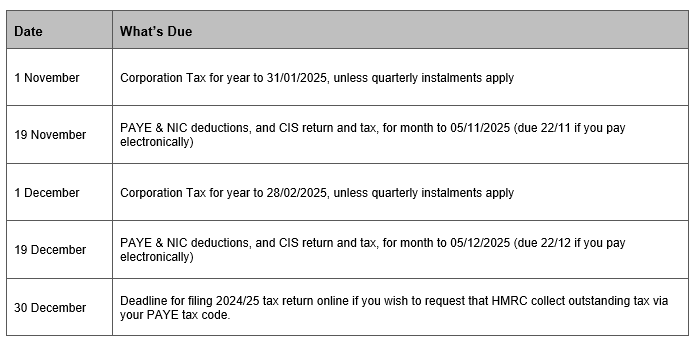
You’ll also find useful dates for your diary this November and December.

Please contact us if you have any questions regarding any of the articles or if you would like further information on a topic we haven’t covered.

November 2025 Tax News

Planned Inheritance Tax Relief Restrictions from April 2026

In Autumn Budget 2024, the Chancellor announced that restrictions to the amount of Agricultural Property Relief (APR) and Business Property Relief (BPR) will apply from 6 April 2026. APR and BPR currently give up to 100% relief from Inheritance Tax (IHT) on qualifying agricultural and business property.

Draft legislation for the restrictions was published in July 2025.

What is expected to happen?

A new £1m allowance will apply to the combined value of business and agricultural property assets that qualify for 100% relief under APR or BPR. The new allowance is in addition to the existing IHT nil-rate bands and exemptions.

Where the combined value of business and agricultural property assets exceeds the £1m allowance, the rate of relief will be reduced to 50% on the value of any qualifying relievable property over the £1m allowance.

For individuals, the £1m allowance will cover:

  • Property in an estate at death.
  • Lifetime transfers to individuals in the seven years before death.
  • Chargeable Lifetime Transfers (CLTs) where there is an immediate lifetime charge (e.g. most transfers into trust).

In addition, BPR will be reduced to 50% on shares designated as ‘not listed’ on the markets of recognised stock exchanges – this means that 100% BPR will no longer be available on AIM shares.

What is the impact of the restriction?

A simple example would be an individual whose estate includes shares in an unquoted trading company valued at £2 million. Under the current rules, 100% BPR would be available, meaning none of the shareholding is subject to IHT. If the proposed restriction applies, only £1 million BPR is available. The remaining £1 million of the shareholding would be subject to 50% BPR, meaning £500,000 would form part of the estate subject to IHT. The £325,000 nil rate band would still be available to offset against the estate subject to IHT.

What can be done now?

It is impossible to plan effectively until the potential tax exposure is known, so the first step is to establish the potential exposure to IHT as a result of the changes and estimate the scale of any IHT liabilities which may arise from 6 April 2026. This step should include a comprehensive analysis of all likely assets and liabilities in a person’s estate, along with how they will be distributed under their Will.

Wills should also be reviewed carefully from an IHT perspective – there may be some simple changes which might improve the overall IHT position.

As noted above, the changes announced are proposals and not yet law. While it may be wise to start to plan, remember that we do not yet know the final rules. If the proposals affect you, please speak to us.


Inheritance Tax Review

It’s expected that there will be some changes to Inheritance Tax (IHT) on the horizon in the upcoming Autumn Budget. These changes may affect property, pensions and gifting so it may be wise to review your IHT ahead of the budget changes.

In partnership with Scrutton Bland, we’re offering our clients an IHT review with an IHT specialist. You’ll meet with your client manager and an IHT specialist who would review your current position and provide you with follow up advice notes to help protect your IHT.

If you’d be interested in these review meetings, please email Emily.Oakes@gascoynes.co.uk to register your interest. We’ll then be in touch with more information, including a date and time slot for you to attend.

Our new Ipswich office is now open!

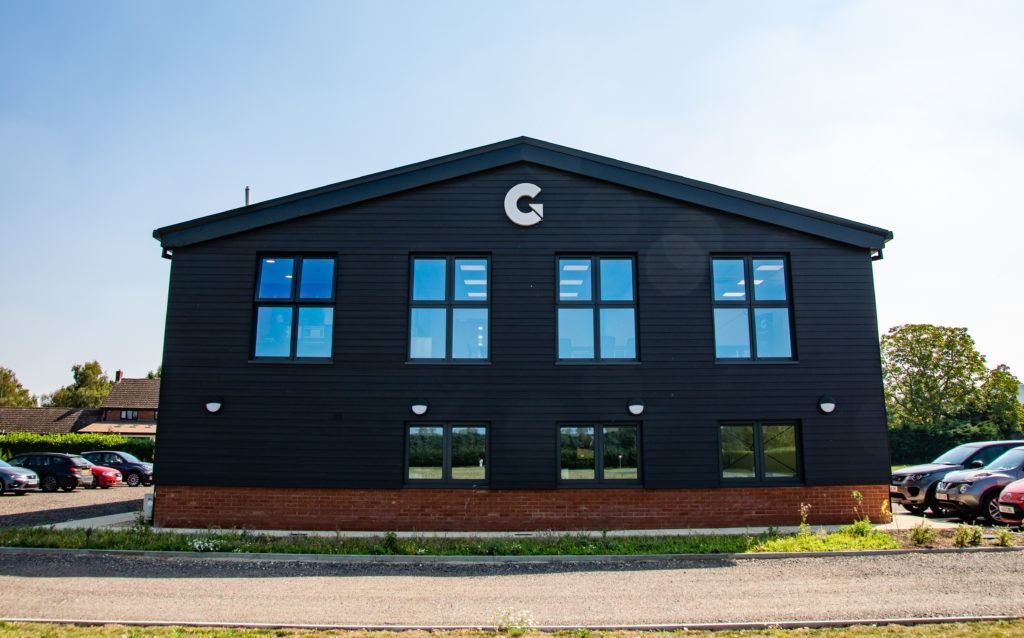
We’re pleased to announce that we’ve now moved from our old Ipswich office to our newly designed, bespoke office in Claydon!

Our new address is now:
Unit 8, Hillview Business Park
Old Ipswich Road
Claydon
Ipswich
Suffolk, IP6 0AJ

Thomas Buckley-Smith, said: “We hope that by moving our Ipswich office out of the town centre and to the outskirts, we’ll be more accessible to those who would like to meet with us and discuss their accountancy needs.”

“The new office is bespoke for us, and reflects the image and culture we have created across Gascoynes over the past five years. It’s bigger and more accessible with plenty of parking.”

“We hope to see you there soon!”

Making Tax Digital: Advice for digitally excluded taxpayers

HMRC has published long-awaited guidance on how digitally excluded individuals should apply for an exemption from Making Tax Digital (MTD) for Income Tax. Gaining HMRC’s agreement that a person is digitally excluded is essential.

What does ‘digitally excluded’ mean?

The MTD legislation defines digitally excluded individuals as those who are unable to use electronic communications or keep electronic records due to their religion, age, disability, location, or any other reason. Unfortunately, HMRC’s guidance does not tell us how they intend to interpret the legislation, although they say they will not accept applications for an exemption if the only reason for applying is one of the following:

  • The individual previously filed a paper return.
  • The individual is unfamiliar with accountancy software.
  • The individual has a small number of digital records to create each tax year.
  • It will take extra time or cost for the individual to sign up for and use MTD for Income Tax.

Applying for exemption due to digitally excluded status

To apply for digital exclusion, you or your representative should either call HMRC’s self-assessment general enquiries line (0300 200 3310) or write to:

Self Assessment
HM Revenue and Customs
BX9 1AS
United Kingdom.

If you would like a friend or family member to call/write on your behalf, you should authorise them to do so, either over the phone or by writing to HMRC.

The application should include the following information:

  • Your name, address and National Insurance number.
  • Details of how you currently submit your tax return (including if someone else helps you do this).
  • The reason you think you are digitally excluded. This should include any additional information to support the claim.
  • Whether you have an agent (for example, an accountant) and what they will do for you.
  • Any additional needs you have, so that HMRC can provide the right support.

Written applications should use the following title: ‘Making Tax Digital for Income Tax – digitally excluded application’

HMRC should respond within 28 days. If HMRC disagree that you are digitally excluded, you can appeal, in writing, to the address provided in the decision letter.

Individuals already excluded from MTD for VAT 

If you are already digitally excluded for MTD for VAT purposes, you should contact HMRC by phone or in writing, using the contact details provided above. Provided your circumstances have not changed, HMRC will agree that you are exempt from MTD for Income Tax. HMRC will need the following information:

  • Your National Insurance number.
  • Your VAT registration number.
  • The reason you are digitally excluded from sending VAT returns using MTD compatible software, and if your circumstances have changed.

For more information please get in touch with us – we can discuss your situation and help you plan your approach to MTD for Income Tax.

VAT: When is biscuit ‘chocolate covered’?

 In a recent First Tier Tribunal (FTT) case, Ferrero Ltd v HMRC, the FTT found that Nutella Biscuits are zero-rated for VAT.

VAT legislation provides that biscuits are zero-rated unless they are wholly or partly covered in chocolate or a substance that is similar to chocolate. HMRC argued that the Nutella Biscuits should be standard-rated on the basis that they were covered in a chocolatey substance.

Nutella Biscuits are constructed in layers, with Nutella filling and a ring made of a chocolate-like substance sitting within two baked biscuit elements that represent the outer surface of the product.

The FTT agreed that the chocolatey ring was visible between the two baked biscuit elements, but it did not form part of the outer surface of the biscuit so it could not be considered ‘covering’.

As such, the FTT found that the biscuits were not covered in anything and could therefore be zero-rated.

If you start selling a new food product, it’s important to consider its VAT rating, as mistakes can be costly. As demonstrated in the Nutella Biscuit case, the legislation is complex, so please get in touch with us if you need advice.

Just George Quiz Night!

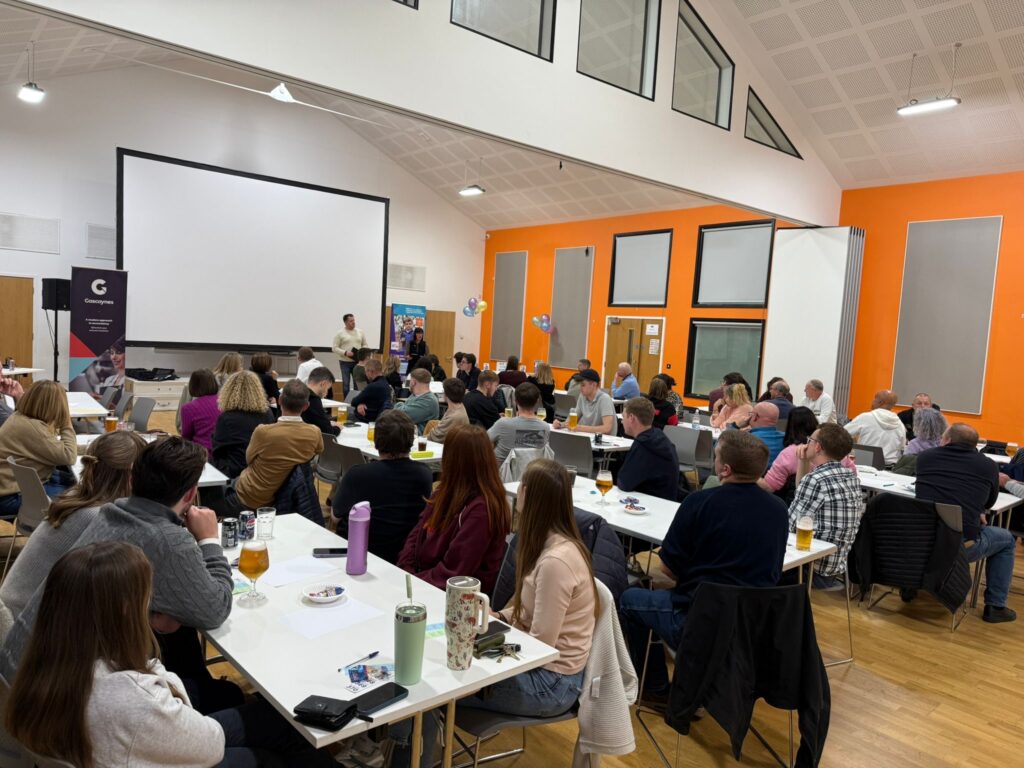
Thank you to everyone who attended our charity Quiz Night on Friday 24th October!

The event raised over £1000 for Just George and is the most we’ve ever raised from our quiz night.

A huge thank you to those attended, who donated raffle prizes, and supported the night!

The money raised will support future research projects for rhabdomyosarcoma and help other families battling with cancer.

If you couldn’t make it, but would still like to donate, you can do so on our JustGiving page below:
https://www.justgiving.com/page/gascoynes-limited-just-george

Partial win for taxpayer in SDLT/ATED relief case

In a recent Upper Tribunal (UT) case, Investment and Securities Trust Limited v HMRC, the UT found that a company was entitled to Annual Tax on Enveloped Dwellings (ATED) relief as it held an option over a property exclusively for the purpose of developing and reselling that property, in the course of its property development trade.

The First Tier Tribunal (FTT) had previously ruled that neither ATED relief nor higher rate Stamp Duty Land Tax (SDLT) relief were available in respect of the property option.

The company had acquired the option for 3 purposes:

    1. Addressing the director/shareholder’s pressing need for funds.
    2. Preventing a sale to a third party.
    3. Allowing time to raise development funds.

The UT agreed with the FTT that relief from the higher rates of SDLT was not available because the legislation requires the chargeable interest to be acquired exclusively for development or redevelopment of land and resale. This test was not met.

The UT found that the FTT had misinterpreted the statutory test for ATED relief, however. The test was whether the interest was held exclusively for development and resale. It followed that once the company had acquired the option, purposes 1 and 2 had been met and the sole reason for the company holding the option was to develop it.

For these reasons, the UT allowed the ATED relief appeal but dismissed the higher rate SDLT relief appeal.

Advisory Fuel Rates: Electric car charging

In the previous edition of this newsletter we showed HMRC’s Advisory Fuel Rates (AFRs) applicable from 1 September 2025. You may have noticed that there was a new rate for fully electric vehicles that are charged using public charging facilities. This means that we now have two electric car rates, which from 1 September are as follows:

Where vehicle charged at home:  8p per mile

Where vehicle charged using public chargers:  14p per mile

Updated quarterly, AFRs assist employers in reimbursing employees for fuel costs incurred during business travel in company cars. They’re also used to calculate the VAT element of business fuel. Additionally, employees may use these rates to repay their employer for the cost of any private fuel usage.

The following updates have been made to HMRC’s AFR guidance:

  • If the cost per mile of a public charger exceeds the AFR, employers or employees may use a higher rate, provided they can show the cost per mile was higher.
  • For journeys where a company car is charged at both public and residential locations, you may apportion the mileage to reflect the proportion of charging at each location.
    • Any apportionment should be carried out on a fair and reasonable basis.

Apprenticeship applications for 2026 now open!

Apprenticeship applications for 2026 are now open! If you know anyone who is looking for a career in accounting then please share our vacancy with them.

We’re looking for an Accounts Apprentice across all three of our offices. They’ll join our Accounts Team helping with preparation of year end accounts and associated tax calculations as well as prepare reports, letters and other documents.

Simply apply before 31 December to join the team in August 2026!

Applications can be made here: https://www.findapprenticeship.service.gov.uk/apprenticeships?searchTerm=Gascoynes&sort=AgeAsc

Key tax dates for November and December 2025

Contact us

If you have any queries on the topics discussed in this newsletter, or any other accounting needs, please do not hesitate to email your client manager, or call the office today on:

  • 01284 755956 for Bury St Edmunds Office.
  • 01953 438450 for Wymondham Office.
  • 01473 212717 for Ipswich Office.

We look forward to speaking with you soon!

Bury St Edmunds Office Gascoynes